DODGE 4669106 Gas Pedal Accelerator
fits model: Neon. make: Dodge. year: 1994–1995.
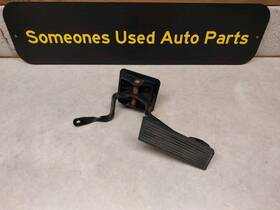
( Manufacturer Part Number: 4669106 ), ( Type: Accelerator Pedal ), ( Items Included: Pedals ), ( Country Of Origin: United States )
Review DODGE Gas Pedal Accelerator fits NEON 1994–1995
The **Dodge 4669106 1994-1995 Neon Gas Pedal Accelerator** is a precision-engineered component designed specifically for the iconic Dodge Neon, a compact car renowned for its sporty handling and performance-driven appeal. This accelerator pedal assembly, part number **4669106**, is a critical element in the vehicle s throttle system, ensuring smooth and responsive engine control while maintaining reliability under daily driving conditions. Crafted with high-quality materials, this pedal features a durable metal construction with a polished, chrome-finished tip for both aesthetic appeal and functional longevity. The design incorporates a robust spring mechanism that provides consistent return force, preventing pedal drift and ensuring accurate throttle response, whether cruising on the highway or accelerating from a stop. Compatible with the **1994 through 1995 model years** of the Dodge Neon, this part is engineered to fit seamlessly with the vehicle s original throttle linkage, making it an ideal replacement for worn or damaged pedals. Whether restoring a classic Neon or maintaining a well-used daily driver, this accelerator pedal delivers the precision and performance expected from Dodge s engineering legacy, blending reliability with the sporty character that defines the Neon s driving experience.
**Pros and Cons of Buying a 1994-1995 Dodge Neon with a Gas Pedal Accelerator Issue (Part Number 4669106)**
### **Pros**
1. **Affordability** The Dodge Neon from the mid-1990s is a budget-friendly used car, making it an attractive option for those on a tight budget. Parts and labor costs are generally lower compared to newer vehicles.
2. **Reliability (for the era)** The Neon s 2.0L or 2.4L engine (depending on the model year) is known for being relatively durable if maintained properly. Many examples run well with basic upkeep.
3. **Fuel Efficiency** The Neon offers decent fuel economy for its class, averaging around **22-26 MPG combined**, which is reasonable for a small sedan from that time.
4. **Simple Mechanics** Compared to modern vehicles, the Neon has straightforward engine and drivetrain components, which can be easier and cheaper to repair.
5. **Parts Availability** Since the Neon was produced in the mid-'90s, replacement parts (including the gas pedal accelerator assembly) are still widely available, both new and used.
6. **Potential for Customization** The Neon has a strong aftermarket following, allowing for engine swaps, suspension upgrades, and other modifications if desired.
7. **Good for Beginners** If you're learning to drive or work on cars, the Neon s size and simplicity make it a good starter vehicle.
---
### **Cons**
1. **Gas Pedal Accelerator Issue (Part #4669106)** The specific problem with the gas pedal accelerator (throttle cable or pedal assembly) is a known weakness in some Neons. If this part is worn or failing, it can lead to:
- **Stalling or hesitation** when accelerating.
- **Difficulty engaging the throttle smoothly**, which can be dangerous.
- **Potential for complete failure**, leaving the car inoperable.
- Replacement costs can range from **$50 $150** for the pedal assembly itself, plus labor if not a DIY fix.
2. **Rust Concerns** Many Neons from this era suffer from **frame rust**, especially in snowy or corrosive climates. A thorough inspection of the undercarriage, wheel wells, and frame rails is essential.
3. **Electrical & Sensor Issues** The Neon s later models (including '95) introduced more electronics, which can lead to:- **Check Engine Lights (CEL)** due to faulty sensors.
- **Transmission or fuel injection problems** if wiring or connectors degrade.
- **Power steering or window regulator failures** (common in this era).
4. **Transmission Problems** The **4-speed automatic (4T45)** and **5-speed manual** have had reliability issues, including:- **Slipping gears** (especially in the auto).
- **Clutch wear** in manual models.
- **Delayed engagement** in the automatic.
5. **Interior Wear & Safety** The interior materials (especially in older examples) can degrade, and **airbag deployment history** should be checked. Some models lack modern safety features like stability control.
6. **Depreciation & Resale Value** The Neon has a **low resale value** compared to other small sedans from the era, meaning you may not recover much if you sell it later.
7. **Potential Hidden Damage** Without a **pre-purchase inspection (PPI)**, you risk buying a car with:- **Leaking radiators or hoses** (common in older engines).
- **Worn suspension components** (ball joints, bushings).
- **Exhaust leaks** (leading to poor performance and noise).
---
### **Conclusion**
The **1994-1995 Dodge Neon** can be a **good budget buy** if you address the **gas pedal accelerator issue** and thoroughly inspect the rest of the vehicle. It s a **practical choice for daily driving** if maintained well, but it s not without **reliability concerns** that come with its age.
The **biggest red flag** here is the **throttle pedal problem**, which, if not fixed immediately, could lead to **dangerous driving conditions**. If the seller is unwilling to replace it or you re not comfortable doing it yourself, this could be a dealbreaker.
---
### **Recommendation**
1. **Get a Pre-Purchase Inspection (PPI)** A mechanic should check:- The **throttle cable/pedal assembly** (confirm it s not seized or worn).
- **Rust condition** (especially frame, subframe, and wheel wells).
- **Engine & transmission health** (listen for unusual noises, check for leaks).
- **Suspension & brakes** (worn pads, rusted rotors, or damaged bushings).
2. **Replace the Gas Pedal Accelerator (Part #4669106) Immediately** If the pedal is stiff, jerky, or unresponsive, **do not drive the car until it s fixed**. The cost is minimal compared to the risk of an accident.
3. **Budget for Potential Repairs** Even if the car passes inspection, set aside **$300 $800** for unexpected issues (cooling system, belts, filters, etc.).
4. **Consider a Manual Transmission** If available, the **5-speed manual** is generally more reliable than the automatic, though both have their quirks.
5. **Test Drive Thoroughly**
- Check for **smooth acceleration** (no hesitation or stalling).
- Listen for **unusual noises** (knocking, grinding, whining).
- Test **brakes, steering, and suspension** for smoothness.
6. **Negotiate the Price** If the car has known issues (like the throttle pedal problem), **ask for a discount** to cover repair costs.
### **Final Verdict: Should You Buy It?**
- **Yes, if:**- The **throttle pedal is in good condition** (or you re prepared to replace it).
- The **PPI shows no major mechanical failures**.
- You re **willing to maintain it regularly** (oil changes, coolant flushes, rust treatment).
- You **don t mind a basic, no-frills car** with limited modern features.
- **No, if:**- The **throttle pedal is failing** and the seller won t fix it.
- The car has **significant rust or mechanical issues** that would cost **$1,000 to repair**.
- You **need a reliable, low-maintenance vehicle** without hidden surprises.
**Alternative Consideration:** If you re looking for a **more reliable used car** in a similar price range, consider a **Honda Civic (1996 2000)** or **Toyota Corolla (1997 2002)**, which have better long-term reliability records.
Would you like guidance on where to find replacement parts or how to inspect the throttle assembly yourself?
Details:
Pedal is in good shape for the age, minimal wear on plastic pivots. Gas pedals removed from 94/95 Dodge Neon's. Price is per each pedal.
part #: 4669106 price
- $50.00
specifications pedalspadsaz:
- for models: Neon
- for makes: Dodge
- for years: 1994-1995
- mpn: 4669106
- type: Accelerator Pedal
- items included: Pedals
- country of origin: United States
shipping pedalspadsaz:
- service: USPS Priority Mail
- carrier: USPS
- cost: $20.50
- class: Expedited
- transit: 2-6 Days
- type: Fixed
general pedalspadsaz:
- condition: Used
- Car Truck Parts Accessories > Interior Parts Accessories > Pedal Assemblies, Pads Parts
seller pedalspadsaz:
- rating: 99.8%
- city: Spring Grove, Pennsylvania
- # reviews: 1801
offer pedalspadsaz:
- availability: In Stock
- quantity: 1
- started: June 10, 2026
- options: Ship-to-home
- sold: 0
returns pedalspadsaz:
- policy: No Returns
payments pedalspadsaz:
- credit card: Visa
- other
- wallet: Apple-pay
Dodge 4669106 Is Similar To:
- 00000001234 Mopar Nos Early Original Dodge Pedal Pads Lot Of (26.5% similar) Nos early original dodge Mopar brake-clutch. Pedal pads lot of...(April 17th, 2018)
- 009837ab Dodge Dakota Steering Column Mounting Bracket With Brake Pedal Oem (28.1% similar) Used items are they will have normal use and wear. 7 magnum with 273. Please understand you are looking at used items. Dodge Dakota steering column mounting bracket with brake pedal 2000 oem 009837AB this is in good working condition ready to be installed...(November 12th, 2018)
- 04103262 Mopar Brake Pedal Assembly Retainer Fits Dodge Dakota (36.5% similar) All available information about this part is included in the listing. This part fits vehicles made in the following years information like which side a left or right and specific vehicle attributes transmission, AWD RWD, other exclusions are included for your column. The image usually shows all ...(May 13th, 2018)
- 04581694ab Dodge Dart Accelerator Brake Pedal Assembly Set Oem (36.5% similar) Free shipping is within the continental us...(October 15th, 2018)
- 04643448 Mopar Clutch Pedal Bushing Fits Dodge Viper (28.6% similar) ...(October 10th, 2018)
- 04669789 Dodge 2003-2005 Neon Srt-4 (38.6% similar) Please review all photos for further details. Here for more SRT-4 parts questions. What you see in the photos is will receive...(September 28th, 2017)
- 04743865af Dodge Journey Emergency Parking Brake Pedal Assembly (34.5% similar) The item has been used previously...(August 23rd, 2018)
- 08 06 Accelerator 07 Oem 04861681aa Pedal Dodge Gas Magnum (32.4% similar) 1 stepdaughters. Free shipping is within the continental us...(October 29th, 2014)
- 04861714ae Oem Accelerator Challenger Pedal 13 Dodge 2013 Gas (31.6% similar) 1 stepdaughters. Free shipping is within the continental us...(August 31st, 2014)
- 04861727ab Chrysler Dodge Wk Srt Brake And Gas Pedal Overlay Kit (42.7% similar) Please see pictures for further details. Dodge Chrysler wk Set brake and gas pedal overlay kit charger challenger please see pictures for further details...(March 21st, 2018)
- 0486176aa Oem Used Accelerator Pedal Dodge Wrangler Charger Mopar Jk 2007 (33.3% similar) Over 2 acres of Chrysler jeep parts. This was pulled from a charger with only 4k miles on it. Buyer pays return shipping. Complete assembly as you see in the picture. We took many pictures of the items so you can see exactly what you are buying. For sale is a genuine 2007 charger accelerator pedal...(October 3rd, 2014)